
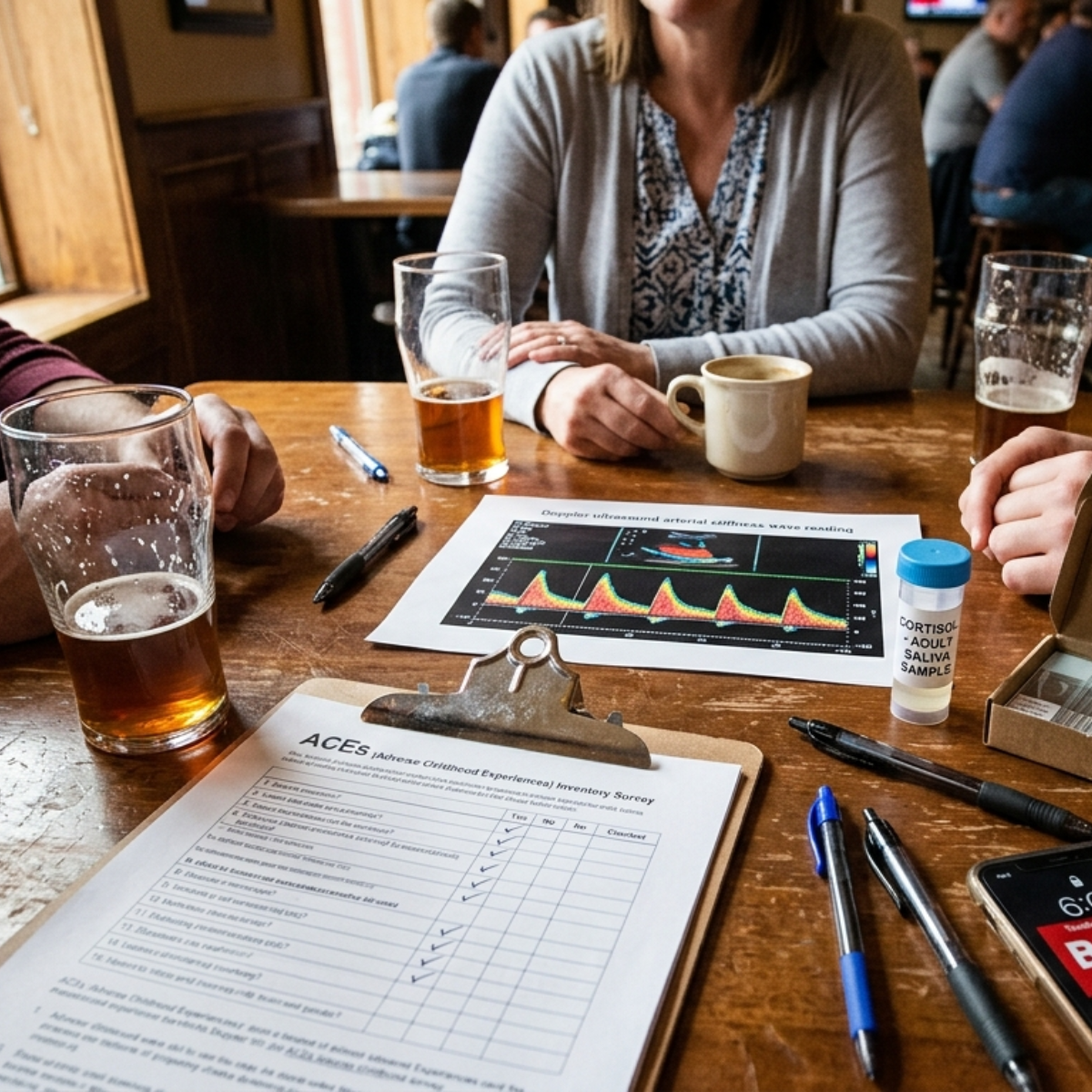
A sociologist, a cardiovascular physiologist, and an immunologist walk into a bar…
Sorry, I can’t come up with a punchline. But I do have a story to tell about when sociologists talk to people in vastly different disciplines to better understand important social issues. I work in the Department of Health Sciences at Brock University. This department is essentially a microcosm of the university. I interact daily with people across disciplines ranging from humanities to physiology to bench science.
April 28, 2026
Terrance J. Wade, PhD (Sociology)
Deborah D. O’Leary, PhD (Cardiovascular Physiology)
Adam MacNeil, Phd (Immunology)
Sorry, I can’t come up with a punchline. But I do have a story to tell about when sociologists talk to people in vastly different disciplines to better understand important social issues. I work in the Department of Health Sciences at Brock University. This department is essentially a microcosm of the university. I interact daily with people across disciplines ranging from humanities to physiology to bench science.
In larger universities, we would never meet because we confine ourselves to our departments and these departments are usually located in different buildings and/or on different campuses. But meet we did, in the hallway, in the lunchroom, and in the pub. More importantly, we developed friendships and talked. We talked about all sorts of things, always coming back to our research. And we quickly realized we were all trying to answer similar questions. So here is our story.
As a sociologist, trained as a stress researcher, one of my longstanding research interests is on adverse childhood experiences (ACEs). For those of you not familiar with ACEs, it has been identified as one of the most important, yet hidden, public health issues of our time. ACEs are severe negative events occurring before the age of 18 and include experiences in the home like child abuse (i.e., physical, sexual, emotional), neglect (emotional, physical, economic), and household dysfunctions (i.e., witnessing intimate partner violence, having a family member with severe addictions and/or mental health problems, a parent in jail, separation from one or both parents), and other events outside the home (e.g., severe bullying, a natural disaster, witnessing a death, etc.).
Most research generally focuses on ACEs in the home and several inventories have been developed and used globally to capture these home-based childhood exposures. Reported prevalence rates using these various inventories is about 60% of people reporting exposure to at least one ACE and about 20% to 25% reporting having been exposed to at least 4 ACEs (see Felitti et al 1998 for the landmark study; also see Afifi 2011; Madigan et al., 2023; Merrick et al., 2018).
Moreover, ACEs have been found to be strongly associated with several negative outcomes including poor mental health, lifestyle behaviours, and chronic disease. And this association is not linear but exponential with higher exposure to ACEs leading to an accelerated increase in risk for disease. The question that I have been trying to answer is “how”. How are ACEs connected with all these outcomes?
Now back to the pub. Initially, in 2007 I put together a grant with my cardiovascular physiologist colleague to examine the social determinants of blood pressure in children in a community sample, funded by the Heart and Stroke Foundation of Ontario. A novel study in its own right, doing detailed cardiovascular and heart health assessments involving Doppler ultrasound. So I slipped an ACEs inventory into the parent questionnaire. Obviously, as it was parents responding and these were kids in grades 6-8, we didn’t include most questions on maltreatment and household dysfunction.
But even without these, we still saw a link between ACEs and their cardiovascular health (Pretty et al., 2013; Klassen et al., 2016). This piqued our interest for two reasons. First, that ACEs already appeared to be having an impact on young kids setting them on a potential lifelong trajectory of poor heart health and other chronic diseases (see Bellis et al. 2019). And second, we wanted to identify the mechanisms connecting ACEs and cardiovascular health.
So now entering the pub was our recently hired immunologist, hired in time to be part of our discussions about a follow-up study ultimately funded in 2017 by CIHR (see Wade et al., 2019). With our Heart and Stroke participants now young adults, we were able to ask them directly about maltreatment and household dysfunctions and we proposed to examine the mechanisms behind this link. Importantly, they had rates of ACEs similar to national and international prevalence studies showing how endemic ACEs are in our communities.
We repeated the same detailed cardiovascular measures and also took samples of blood (inflammatory markers), saliva (DNA), and scalp hair (chronic cortisol). While analyses are still ongoing, we have been able to start identifying various mechanistic pathways such as through the inflammatory system, to gain a fuller picture of these processes (e.g., Wong et al, 2022). Our findings linked ACEs with several pre-clinical markers of heart health that are connected to heart diseases in later adulthood (Rafiq et al., 2020). Additionally, we also saw that the cardiovascular system of those with a high ACE profile respond differently to externally imposed stress (in this case an orthostatic stress initiated via 60 degrees head up tilt at ) (Dempster et al., 2023).
A Masters’ project we supervised simply examined blood serum in a pilot study. We compared males with a high ACE profile to males with a low ACE profile by exposing their serum to a commercially available line of male aortic endothelial cells. We saw higher gene expression of pro-inflammatory markers and lower gene expression of protective anti-inflammatory markers over a 24-hour period among those with a high ACE profile (Gagnon 2023; unpublished Masters’ thesis). We are now repeating this with a female aortic endothelial cell line and increasing our male sample as well.
While there is still much work to be done, there are two take-home messages from this story. First, it helps confirm that ACEs are much more prevalent than commonly perceived, and they are an enormous public health problem. About 1 in 4 people have high levels of exposure to ACEs exposing them to significantly greater risk for higher lifelong chronic CV and other diseases. So, now we need to understand the processes involved.
Second, as a sociologist, this story shows the importance of moving outside one’s discipline to talk with others. To be able to better understand how social structure is connected to health outcomes provides a significant step forward in sociological health research. Moving beyond our usual inferences describing these connections to exploring the actual underlying mechanistic pathways would be impossible without these collaborations. And because we are all interested in the same question – how do we improve health - get out of your office and your department, go to the pub, and meet your new collaborators!
Key Readings:
Afifi 2011 Child Maltreatment in Canada: An Understudied Public Health Problem. Can J Public Health 2011;102(6):459-61.
Dempster KS, Wade TJ, MacNeil AJ, O’Leary DD. (2023) Adverse childhood experiences are associated with altered cardiovascular reactivity to head-up tilt in young adults. American Journal of Physiology-Regulatory, Integrative and Comparative Physiology. DOI: 10.1152/ajpregu.00148.2022
*Felitti VJ, Anda RF, Nordenberg D, et al. (1998). Relationship of childhood abuse and household dysfunction to many of the leading causes of death in adults: the Adverse Childhood Experiences (ACE) Study. American Journal of Preventive Medicine, 1998;14(4):245-258. DOI: 10.1016/S0749-3797(98)00017-8.
Gagnon, M. (2023). The Effect of Adverse Childhood Events on Endothelial Function in Young Adults. Unpublished Masters’ thesis.
*Rafiq T, O’Leary DD, Dempster K, Cairney J, Wade TJ. (2020). Adverse childhood experiences (ACEs) predict increased arterial stiffness from childhood to early adulthood: Pilot Analysis of the Niagara Longitudinal Heart Study. Journal of Child & Adolescent Trauma, 13, 505-514. DOI: 10.1007/s40653-020-00311-3.
Klassen S, Chirico D, O’Leary DD, Cairney J, Wade TJ. (2016). Linking Systemic Arterial Stiffness among Adolescents to Adverse Childhood Experiences. Child Abuse & Neglect, 56, 1-10.
Madigan S, Deneault A-A, Racine N, Park J, Theimann R, Zhu J, Dimitropoulas G, Williamson T, Fearon P, Cénat JM, McDonald S, Devereux C, Neville RD. (2023). Adverse childhood experiences: a meta-analysis of prevalence and moderators among half a million adults in 206 studies. World Psychiatry 22:463-471.
Merrick MT, Ford DC, PhD; Ports KA, Guinn AS. (2018). Prevalence of Adverse Childhood Experiences From the 2011-2014 Behavioral Risk Factor Surveillance System in 23 States. JAMA Pediatrics. DOI:10.1001/jamapediatrics.2018.2537.
Pretty C, Cairney J, O’Leary DD, Wade TJ. (2013). Adverse childhood experiences and the cardiovascular health of children. BMC Pediatrics, BMC Pediatrics, 13:208. DOI: 10.1186/1471-2431-13-208.
Wade TJ, O’Leary DD, Dempster KS, MacNeil AJ, Molnar DS, McGrath J, Cairney J. (2019). Adverse childhood experiences (ACEs) and cardiovascular development from childhood to early adulthood: Study protocol of the Niagara Longitudinal Heart Study (NLHS). BMJ Open, 2019; 9: 7. DOI:10.1136/bmjopen-2019-030339.
Wong K, Wade TJ, Moore J, Marcellus A, Molnar DS, O’Leary DD, MacNeil AJ. (2022). Examining the relationships between adverse childhood experiences (ACEs), cortisol, and inflammation among young adults. Brain, Behavior & Immunology – Health. DOI: 10.1016/j.bbih.2022.100516

Let’s not try to outsmart AI: A Sociologist’s reflection on teaching and learning in the GenAI Era.
In early January, when most people were still finalizing their New Year resolutions, I sat in front of my computer preparing to teach Gender, Sex, and Health. While the two years during which I did not teach this course might seem like a short pause, for me they marked a shift in the pedagogical era, a shift shaped by the rapid proliferation of generative AI.
February 24, 2026
Elena Neiterman, University of Waterloo
In early January, when most people were still finalizing their New Year resolutions, I sat in front of my computer preparing to teach Gender, Sex, and Health. While the two years during which I did not teach this course might seem like a short pause, for me they marked a shift in the pedagogical era, a shift shaped by the rapid proliferation of generative AI.
I am not new to teaching, or so I thought. As a teaching faculty with 15 years of experience, I have taught thousands of students, across dozens of different courses. It felt like I’ve done it all. Like I knew it all. Until it didn’t.
When AI Entered the Classroom
When generative AI crept into the classroom, few of us were prepared. As with many other new and exciting educational tools, some instructors jumped at the opportunity to experiment with this technology, while others felt the harms of GenAI were so significant that it should be banned and outlawed.
The media didn’t help either. Headlines reported on the excessive use of GenAI in education, where instructors used GenAI to create and grade assignments, while students relied on ChatGPT or other similar platforms to complete these tasks. Some articles openly questioned whether academic institutions themselves would soon become obsolete. And somehow, amidst all this buzz, we were expected to teach.
After spending some time in blissful denial, I had to face reality. A sudden and rather unexpected improvement in students’ writing hinted they might be using GenAI. Yet, our traditional tools like Turnitin were strikingly ineffective in detecting AI use. I spent hours sorting through plagiarism reports that were neither accurate nor reliable. I was not fond of this detective work – I chose a career in teaching, not policing.
Almost simultaneously, I also saw a dramatic jump in students’ grades on online tests and quizzes. True, there might have been a chance that we lucked out and admitted into our program a cohort of prodigies… but it was much more likely that my assessments were no longer aligned with the new learning landscape.
Facing GenAI Reality
Like many instructors, I struggled with what to do. Workshops about GenAI left me feeling overwhelmed. I learned that ChatGPT could plan my lessons, generate lecture slides, compose exam questions, design class activities and assignments. Students, meanwhile, could use AI to write assignments and tests, to summarize readings without ever reading them, and to substitute my “exam prep” by generating exam questions from my slides.
In short, it could do it all. So, where did that leave me? What role could I still have when seemingly anything and everything I do might be replaced by AI?
Rethinking the Purpose of Teaching
This new reality forced me to rethink my teaching. For years, I strongly believed in the value of writing as a tool for developing critical thinking skills. Was it still important, I wondered, to hone students' writing skills when Grammarly, ChatGPT, and even Outlook could do it for them?
How essential is it today to memorize dates and facts when most of us do not remember the phone numbers of our family members and friends?
What was the purpose of banning GenAI from my courses when employers across the country now are expecting students to be experts in AI?
More importantly, what could I still offer to students that GenAI could not? What did I want them to learn in my classroom?
After going through this professional identity crisis, I ultimately settled on two skills - critical thinking and interpersonal communication.
Teaching Critical Thinking in an AI World
True, ChatGPT can generate knowledge, but – at least for now – it cannot truly think. We – humans – still need to develop the ability to critically assess the outputs provided by AI, interrogating their accuracy, validity, and biases.
Redesigning my assignments, I invited students to use GenAI, but also to critique it. What was overlooked or taken-for-granted in the paper they produced with the assistance of GenAI? Where were its blind spots, and how could we, as sociologists, detect those? What prompts should we use to receive an effective output from GenAI? What can we learn from this process about our own assumptions and biases?
In the era of information overload, these questions help students learn to think and act like sociologists.
Re-establishing Human Connection
The other skill I integrated into my teaching is interpersonal communication. Today’s students have lived through online learning during the COVID-19 pandemic and the rise of always-on technology. They crave human connection, yet many of them struggle with social anxiety.
No AI can replace the embodied, spontaneous, sometimes awkward but always human experiences of peer interaction. Learning is about exchanging ideas, and today this exchange among humans seems more important than ever.
So, I cut down on my “sage-on-the-stage” time in class, leaving more space for small-group discussions and think-pair-share exercises. Even in large classes, I strive to create small pockets of community. Class discussions do not always work (especially if you happen to teach an early morning required class), but when they do, they create a special energy in the room, the kind of energy that I have yet to experience communicating with ChatGPT.
Moving Forward
I am not naïve. I know these strategies are neither perfect nor permanent. GenAI is improving daily.
Designing my assignment for Gender, Sex, and Health, I asked ChatGPT, “How can I make it AI-proofed?” The response was surprisingly thoughtful: ask students to select specific quotes from the readings and connect them to class discussions.
Great idea, I thought, until I realized AI can also help students find these quotes and link them to the course content.
I cannot outsmart GenAI. I am not that talented or witty. Most importantly, I do not want to play this game. And perhaps that is the point.
What I can do is teach students to be critical consumers of AI-generated information. All technologies reflect the biases and assumptions of humans who built them.
Learning sociology has always been about questioning how the world works. GenAI is now a part of this world. We owe it to our students to question what it has to offer. And here, our work as educators just begins.
Interested in discussing this topic in more detail?
Join our next CSSH Teaching Conversation Circle Tuesday March 3rd, 2026 12:30-1:30 EST
Register here: https://uottawa-ca.zoom.us/meeting/register/w67lErbOQu2w7QSvrmCuZg
Handwashing and the inequities of responsibility in public health
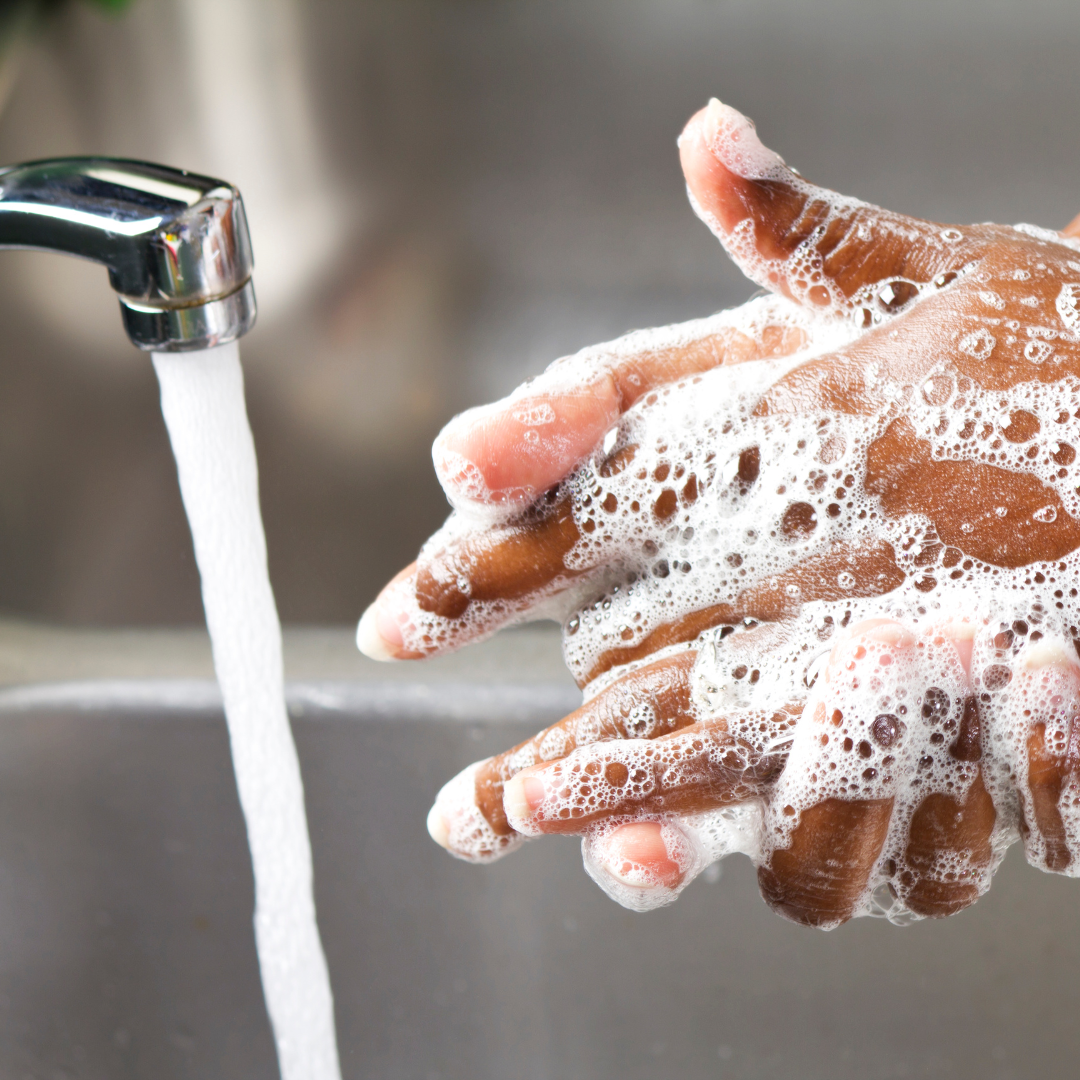
Research inspiration comes at the strangest times. I first got interested in handwashing in a restaurant powder room in 2012. There, above the sink, was a laminated poster by Ottawa Health featuring illustrations and instructions about handwashing (which apparently had six stages), under the headline, “Ottawa’s health is in your hands.” Since when, I thought, did adults need to be told how to wash their hands?
December 15, 2025
Emma Whelan, Dalhousie University
Research inspiration comes at the strangest times. I first got interested in handwashing in a restaurant powder room in 2012. There, above the sink, was a laminated poster by Ottawa Health featuring illustrations and instructions about handwashing (which apparently had six stages), under the headline, “Ottawa’s health is in your hands.” Since when, I thought, did adults need to be told how to wash their hands? And since when did individuals’ handwashing habits have such dire consequences for our Nation’s Capital--and become such an intense site of moral regulation? Nevertheless, I felt hailed and called to action by the poster—‘interpellated,’ Louis Althusser would say—and washed even more thoroughly than I normally do. I like to think that I left Ottawa in the good health I found it.
That was the beginning of a research program that I’ve been working on for thirteen years, the results of which are in my (almost complete!) book manuscript. I began by investigating the contemporary problematization of handwashing, first in the Canadian news media, then in the medical journal literature. But then I became interested in whether there were historical precedents for this public health interest in handwashing habits in the community. Some digging around in Wellcome Collection (a wonderful library on the history of medicine in London) showed me there were: handwashing—and cleanliness promotion more generally—was a focus of significant activity by state and voluntary health organizations in interwar Britain. The first (to my knowledge) voluntary health organization with the express purpose of promoting personal cleanliness was founded in London in 1926: the Health & Cleanliness Council, or HCC. Organized by a group of medical, education and social welfare experts, including Medical Officers of Health, public health professors, and child and maternal welfare activists with a maternal feminist bent, the Council formally operated until 1946, though its activities declined during the war years. The HCC produced a wide range of publications, including posters, leaflets, handbooks, films, and lantern slides, offered lectures and demonstrations about cleanliness, and helped to organize local Health Weeks and Baby Weeks. All services and publications were provided free or at nominal cost, and were only issued upon request. Considering this policy, the Council’s success in distributing its propaganda is impressive: by the end of its first full year of operation, 1927, the HCC had distributed 63 distinct publications to 1200 different areas in England and Wales; the following year, the Council distributed over 6 million copies of publications and participated in 156 local Health and Baby Weeks.
The Council preached cleanliness for all, and a few publications were geared to adult men and single women. But the vast majority of its campaigning was targeted to children and their mothers, both through the school system and through maternal and infant welfare centres, set up expressly to reach poor women and children. While men were criticized for their lamentable inattention or hostility to cleanliness, and could spread disease as easily as women, they were rarely assigned any labours or responsibility to help prevent disease. It was mainly women who were made responsible for ensuring the personal and household cleanliness of the family—even of the menfolk. Poor women were praised if they strove to meet the Council’s standards of cleanliness pitied for the difficult housing conditions that undermined their efforts, and deemed worthy of help. But “slovenly” women’s dirtiness and poor housekeeping “not only drove their husbands to the public house for greater comfort, but enhanced disease among the children” (Health & Cleanliness Council Quarterly Bulletin, December 1931, p. 6). In assigning responsibility for the cleanliness of children and adult men to women, the Health & Cleanliness Council was not alone. Advertisements, booklets, and other materials produced by soap companies likewise aimed to recruit wives and mothers into cleanliness by warning of the dangers of dirty hands. They emphasized women’s responsibility to keep home and family safe from such dangers through constant surveillance and cajoling of children’s and husbands’ handwashing and, of course, the purchase of the companies’ products. Lever Brothers’ Mother the Health Doctor campaign in Britain and the United States, and its Clean Hands Game campaign in Canada are examples. Articles in both the Health Education Journal and the New England Journal of Medicine reported that the HCC was funded by the soap industry, but this was not acknowledged in the Council’s own publications. The year after the HCC was established, a similar organization called the Cleanliness Institute was founded in the United States, openly funded by the Association of American Soap and Glycerine Producers.
Interwar handwashing promotion materials assigned responsibility for family and child cleanliness to mothers generally in Britain and North America, and to working class mothers particularly in the UK through the work of the HCC, and in both cases mothers were typically depicted as white. But cleanliness and handwashing campaigns also depicted and, in some cases, addressed non-white and colonized populations. For example, in the closing scene of an animated film by the HCC, Ten Little Dirty Boys, dirty English schoolboys are represented as Black until a good wash transforms them into white boys again. In The Book of Civilization, Albert Rutherford Paterson, Director of Medical Services for Kenya Colony, addresses Kenyan men. He asserts that Kenyans’ health is poor because their standard of cleanliness, particularly of their hands, was inferior to European standards. To ameliorate this, Kenyan women, supervised strictly by their husbands, should devote themselves to keeping their homes, food, and families clean--not to digging in the fields or carrying water. Imported commodities, especially soap, were necessary to achieve cleanliness, and to earn enough money to purchase them, Kenyan men must devote themselves to raising cash crops for European markets. Should Kenyans fail to follow this advice, the sure result was sickness and death. Paterson thus advocated a rigid distinction between women’s and men’s labour, home and work, consumption and production, fuelling colonial trade by increasing both the market for the colonizer’s products and its supply of raw materials. The book shows us how the advocacy of cleanliness worked to support efforts to align colonized peoples’ economic activity with British colonizers’ goals, in part by aiming to reshape gendered labour and familial responsibilities.
Contemporary handwashing campaigns in the Global South still often imply that racialized mothers bear primary responsibility for childhood death and disease, by suggesting that mothers’ vigilance in keeping their own and their children’s hands clean is the answer to the problem of early childhood mortality. Lifebuoy Global’s “Help a Child Reach Five” campaign video, “Chamki,” is one example. While much of the research on hand hygiene promotion fails to question this framing, some scholars and activists have offered a more critical perspective, pointing out that many of the communities targeted by industry-led and public-private partnership campaigns to wash with soap do not yet have a clean water supply to wash with. They argue that such campaigns represent the rise of a neoliberal, individualizing approach to addressing global health problems, whereby global health agencies promote the access of multinationals based in wealthy countries to ‘emerging markets’ in the Global South, often at the expense of local soap producers and local government input, and without solving the structurally based health problems that affect these communities. Magdalena Bexell advocates for an alternative approach that frames the targets of public health interventions as “rights-based subjects” rather than “soap consumers” and views health as “as a public welfare matter” rather than “a market commodity.”
The mundane practice of handwashing and its promotion turn out to be fruitful sites for exploring the mix of public and private interests and the gendered, classed, and racialized inequities in moral regulation and assignment of responsibility in public health.