

CSSH Awards
Overview
The Canadian Society for the Sociology of Health/Société Canadienne de Sociologie de la Santé aims to build capacity in the sociology of health and related disciplines by creating awards to recognize exceptional papers, posters or alternative academic work that advances the CSSH-SCSS’s aims of promoting sociology of health research and knowledge mobilization.
Eligibility
Candidates must be currently registered (or have registered for at least one semester during the previous 12-month period) as an undergraduate, master’s, or doctoral student in a sociology or related health sciences program at a recognized Canadian university. Postdoctoral Fellows are also encouraged to submit their work for consideration. The applicant must be a member of CSSH/SCSS at the time of application. Nominations on behalf of others will not be accepted, but faculty members are welcome to encourage students to consider submitting eligible work. In cases where the student is a co-author or co-creator, the student’s contribution should be clearly described in the space provided in the award submission form. Written (emailed) consent from co-authors/creators will be requested by the adjudication committee prior to the award conferral.
Categories
There are two award categories which may be awarded to up to eight student members per year (each category may be awarded once at the Undergraduate, Master’s, Doctoral, and Post-Doctoral levels of study). Both kinds of submissions may be submitted in French, English or Indigenous languages (the committee may require translation or may seek translation outside of the committee when the committee has limited language comprehension). Details regarding the two award categories are as follows:
1. CSSH-SCSS Student Excellence Award: Recognizes an academic paper or poster based on original student work, including data collection, literature reviews, and theoretical contributions. The paper can be under review at time of submission, but not previously published or accepted for publication by the deadline for submission. The submission should be prepared for an academic audience and publishing format, employ a consistent and recognized citation style, and should not exceed 8,000 words inclusive of references. PDF and Word file formats are accepted.
2. CSSH-SCSS Award for Student Excellence in Scientific Communication: Recognizes alternative academic works (e.g., infographics, short video, podcasts, artistic works, and other forms of creative knowledge mobilization) that disseminate or otherwise communicate original scientific research related to the sociology of health. The award committee must be able to digitally access and review the work as part of the adjudication process, but there are no restrictions on the medium or format of the work provided that a) it can be reviewed by the committee to an extent that is sufficient for evaluation of award eligibility, and b) it is able to shared with the CSSH-SCSS membership and on the website. Where appropriate, alternate, partial, or indirect representations (e.g., photographs accompanied by an oral or written description) will be accepted.
Submission Criteria and Selection Procedure
The CSSH/SCSS Awards Committee consists of (4) Advisory Board members on the awards committee (two faculty and two Student Advisors). Applicants are encouraged to reach out to the Awards Committee with any questions ahead of submitting their application at cssh.scss@gmail.com using ‘AWARDS’ in the subject line. Do not use this email to submit your application.
There is an annual rolling call for submissions which cuts off on April 30th. Submitted works will be considered with applicants from the same level of study (e.g., applicants at the undergraduate level considered together, and likewise for master’s, doctoral, and post-doctoral applicant cohorts).
The Committee will apply an EDI and anti-colonial lens in assessing the applications, giving preference to Indigenous peoples, racialized persons, persons with disabilities, persons who identify as women and/or 2SLGBTQQIA.
The Committee will select the recipients of the award/s and announce them ahead of the Virtual Conference where they will be invited to participate in a virtual symposium and reception. Award recipients will be provided with opportunities to share their research with our members and the public through the CSSH-SCSS website, newsletters, and social media channels. Members will be encouraged to consider adopting the award recipients’ works into relevant course offerings.
Recipients: ROBIN BADGLEY AWARD

Andrea Polonijo: winner of the 2019 Robin Badgley Memorial Student Award
The 2019 Robin Badgley Memorial Student Award was presented to Andrea Polonijo for her paper “Social Inequalities in the Diffusion of Health Promoting Innovations: Evaluating the Impact of Mandates on Human Papillomavirus Vaccination.”
Andrea is a Chancellor’s Postdoctoral Fellow in the Department of Social Medicine, Population, & Public Health at the University of California, Riverside. Trained in medical sociology and public health, she studies how social factors such as income, education, race-ethnicity, and sexual orientation influence health behaviours and health outcomes.
Her current research focuses on social inequalities in vaccination, in local, national, and international contexts. She is leading two pilot studies in California’s Inland Empire. The first study aims to develop and evaluate a community-based intervention that bundles HPV and meningitis vaccination with rapid HIV testing. The second study aims to identify barriers and facilitators to HPV vaccination among adults aged 27–45, who are newly eligible for the vaccine. At the national level, she is leading a quantitative survey of US adults to examine the association between prosocial attitudes and social inequalities in vaccination. She is also collaborating on an international project that examines how family- and community-level socioeconomic status shape childhood vaccination in Denmark.
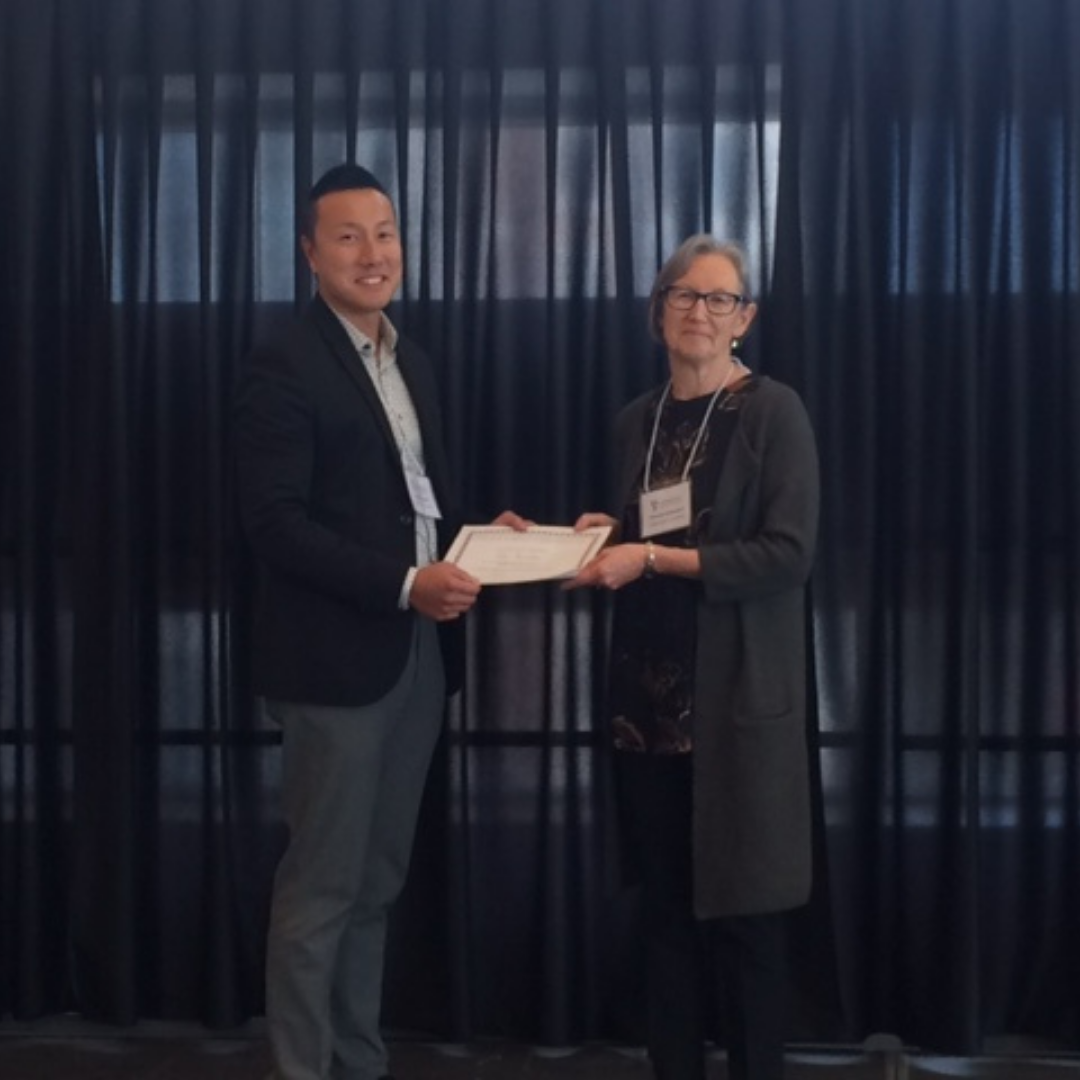
Hadi Karsoho: winner of the 2016 Robin Badgley Memorial Student Award
The 2016 Robin Badgley Memorial Student Award was presented to Hadi Karsoho for his paper “Articulating Suffering with the Role of Medicine at the End of Life: The Case of Physician-Assisted Dying.” Hadi Karsoho is a Ph.D. candidate at McGill University in the Departments of Sociology and Social Studies of Medicine. Hadi’s research program is broadly concerned with questions of contemporary death and dying that lie at the intersection of medicine, ethics, and law. For his doctoral thesis, Hadi examines how different stakeholders come together in one notable litigation, Carter v. Canada, to debate the legality and ethics of physician-assisted dying (i.e., medical assistance in dying). Carter resulted in the decriminalization of physician-assisted dying in Canada in 2016 and, to the best of our knowledge, Hadi’s research is the first in-depth, empirical examination of the landmark court case. Hadi’s thesis forms part of a larger research project, funded by the Canadian Institutes of Health Research (CIHR), on public controversies of medicalized dying in Canada.
Tania Jenkins: winner of the 2014 Robin Badgley Memorial Student Award
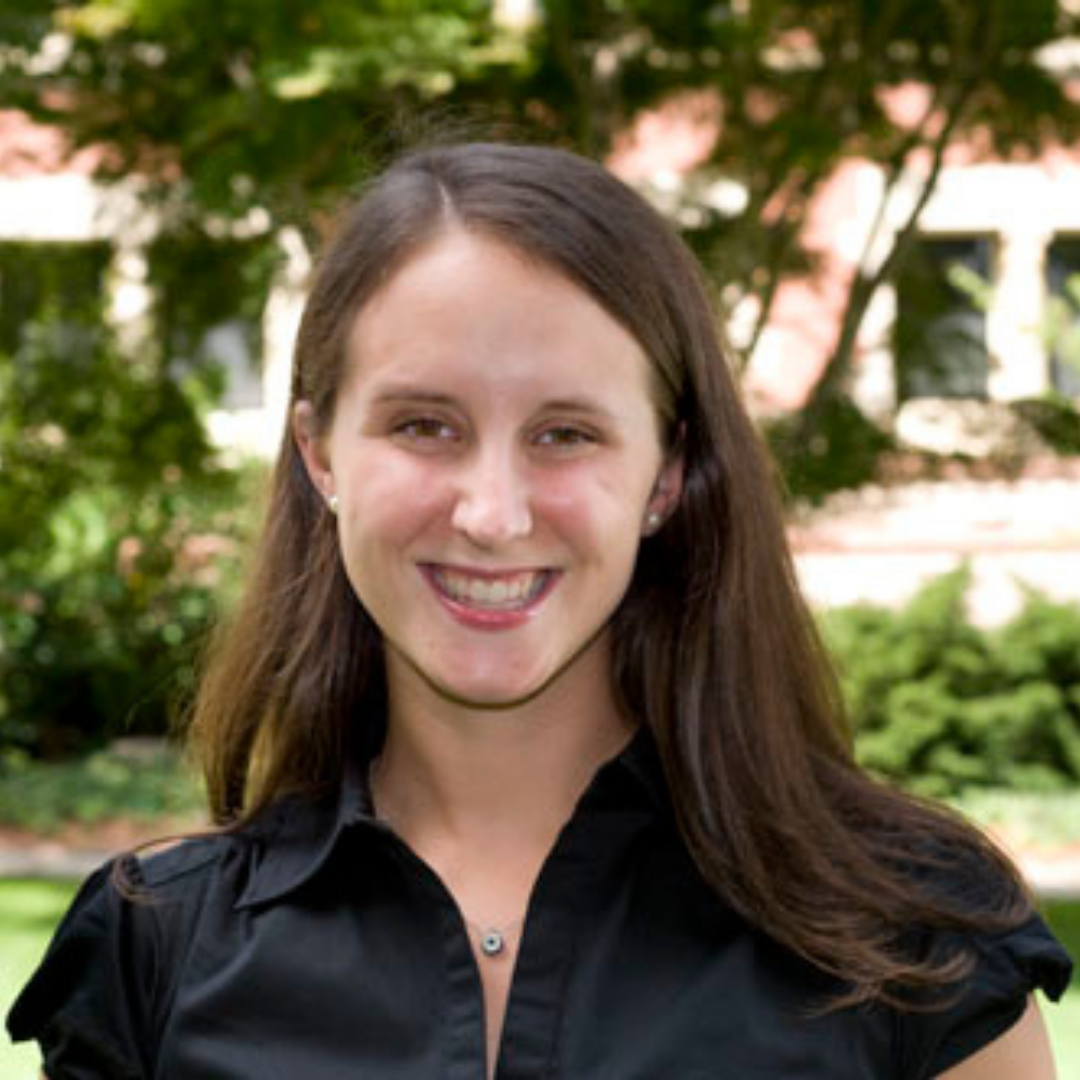
Tania Jenkins’ winning submission is a single-authored paper titled “‘It’s Time She Stopped Torturing Herself’ Medical Paternalism in End-Of-Life Care Among Internal Medicine Residents.”
Tania M. Jenkins is a Ph.D. candidate in the Department of Sociology at Brown University in Providence, RI (USA). In 2010, she was awarded the SSHRC Doctoral Fellowship to support her doctoral training. Her research interests are centred around medical sociology, particularly the medical profession, professional stratification, sociology of diagnosis and ethnography. Tania’s dissertation research examines the (re)production of status inequalities among internal medicine residents in the United States. Through a comparative hospital ethnography of two medical centers, she explores how educational pedigree (i.e. where residents went to medical school) affects trainees’ opportunities in residency and beyond.
Prior to her Ph.D., Tania obtained an MA from McGill University, where her SSHRC-funded master’s research examined the relationship between access to primary care and socio-economic status in Quebec, using a mixed-methods approach. Her Master’s work earned her several accolades, including the McGill Institute for the Study of Canada Joseph and Sandra Rotman prize for Student Excellence in Public Policy Innovation, as well as the Governor General of Canada’s Academic Excellence Gold Medal.
She currently has two sole-authored publications in Qualitative Health Research and Health, as well as co-authored manuscripts in BMC: Health Services, Social Science & Medicine and American Journal of Public Health.